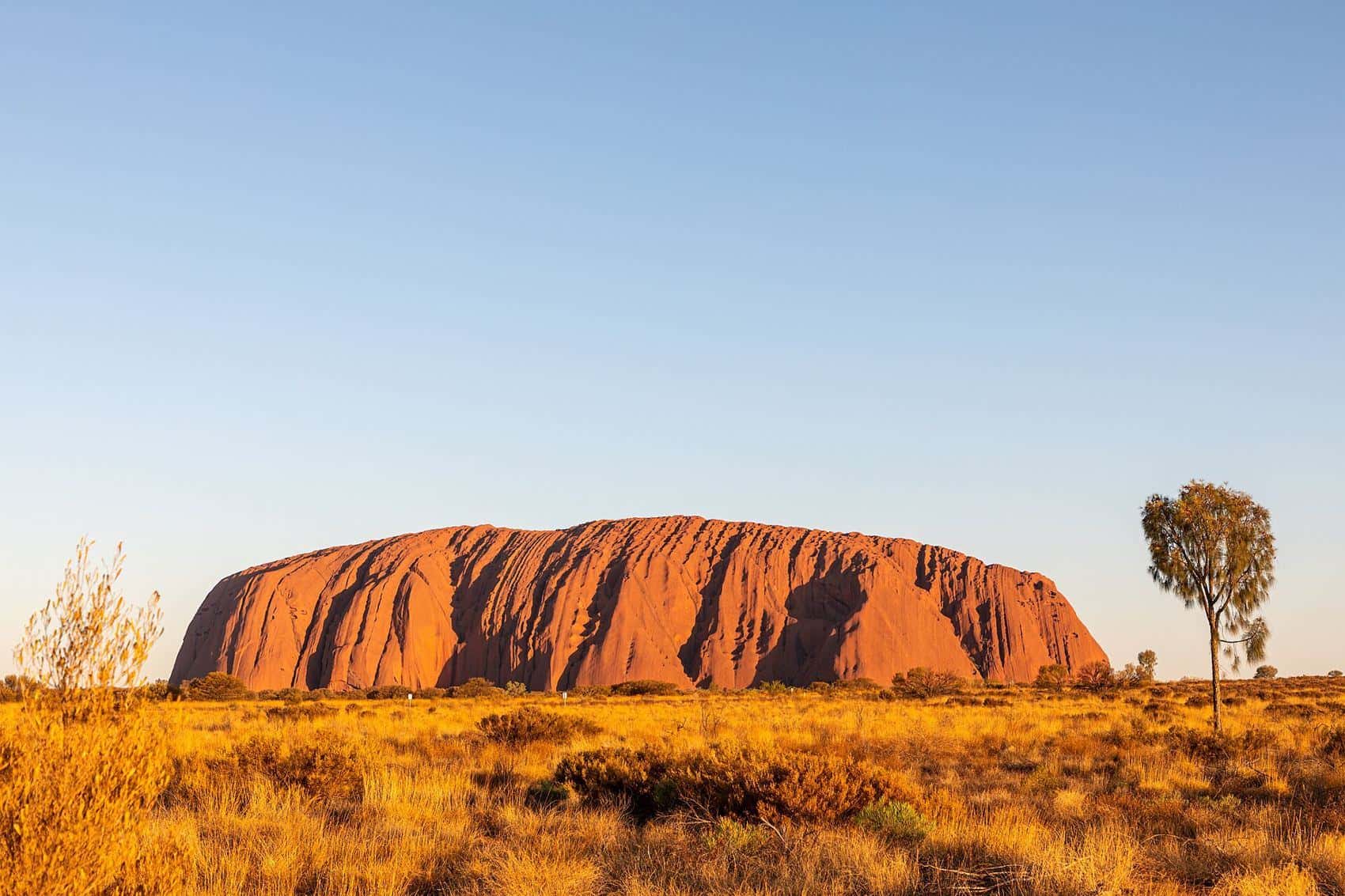
Seeing Uluru change colour at sunrise or sunset is a highlight of any trip to Australia. Uluṟu-Kata Tjuṯa National Park is jointly managed by its Traditional Owners, the Aṉangu, and Parks Australia, and it is World Heritage listed for both its natural and cultural values. A visit is about more than the view. It is a chance to learn about one of the world's oldest living cultures.
$38
Adult 3-day pass
Parks Australia, check current price
$50
Annual pass
Parks Australia
Free
Under 18
Entry included
2019
Climb closed
Permanently, 26 October
Park passes
Everyone entering the park needs a pass. Parks Australia lists:
- Adult 3-day pass: $38
- Annual pass: $50
- Under 18s: free
Buy your pass online before you arrive or at the park entry station. Prices can change, so check the official uluru.gov.au pass page before you go. If you join a tour, check whether the pass is included.
Respecting Aṉangu culture
Uluru is a sacred place. Aṉangu ask visitors to respect their law and culture:
- Do not climb. The climb was permanently closed on 26 October 2019.
- Follow photography restrictions. Some sacred sites are not to be photographed or filmed. Signs mark them.
- Stay on marked tracks.
- Take nothing away, including rocks and sand.
The Cultural Centre near Uluru is the best place to start. It explains Tjukurpa, the Aṉangu law and belief system that underpins life and the landscape.
Best time to visit
The park is open year-round, but conditions vary hugely:
- April to October: mild to warm days, ideal for walking. Winter nights can be very cold.
- November to March: very hot days. Walk early, carry water and expect some walks to close early when it is hot.
Read our guide to the best time to visit for the full picture.
Getting there
By air: Ayers Rock Airport (Connellan) is close to Yulara, the resort town just outside the park. Flights connect with several Australian cities.
By road: Uluru is a long drive from Alice Springs on sealed roads via the Stuart and Lasseter highways. Many visitors combine it with Kings Canyon in Watarrka National Park. Read driving in Australia before tackling outback roads.
Where to stay
Accommodation is concentrated in Yulara (Ayers Rock Resort), which has options from campgrounds to hotels. There is no accommodation inside the park itself. Book well ahead for the cooler months.
Things to do
Uluru base walk
The base walk circles Uluru, taking in waterholes, rock art and sacred sites. It is flat and around 10 km. Allow several hours, start early in warm weather and carry water. Shorter walks such as the Mala and Kuniya walks are good alternatives.
Kata Tjuta
Kata Tjuṯa, a group of domed rock formations to the west of Uluru, is also sacred to Aṉangu. The Walpa Gorge walk is short, while the Valley of the Winds walk is longer and more challenging. Parts of the Valley of the Winds walk close on hot days.
Sunrise and sunset
Designated viewing areas offer sunrise and sunset views of both Uluru and Kata Tjuta. They can be busy, so arrive early.
Ranger-guided walks and tours
Free ranger-guided activities run at times of year, and many licensed operators offer cultural tours, guided walks and scenic flights. Choose operators that work with Aṉangu where possible.
Safety
- Heat: carry at least one litre of water per person per hour of walking in warm weather.
- Sun: wear a hat, sunscreen and sunglasses.
- Flies: a fly net helps in warmer months.
- Walk early in warm weather and follow closure signs.
Combining Uluru with the rest of the Red Centre
Many travellers spend time in the wider region:
- Kings Canyon in Watarrka National Park, with the Rim Walk above the canyon walls.
- Alice Springs, with Aboriginal art centres, the Desert Park and access to the West MacDonnell Ranges.
- The West MacDonnell Ranges (Tjoritja), with gorges, waterholes and sections of the Larapinta Trail.
A loop from Alice Springs taking in the MacDonnell Ranges, Kings Canyon and Uluru is a popular road trip. Some routes include unsealed roads that need a suitable vehicle and permits, so check before you go.
Photography and drones
Personal photography is welcome in most of the park, but some sacred sites have restrictions. Flying drones in the park is restricted, and commercial filming needs a permit. Check Parks Australia's rules before you bring a drone.
Accessibility
Parts of the Uluru base walk, the Cultural Centre and some viewing areas are accessible. Ask at the Cultural Centre or check Parks Australia for current information.
Uluru planning checklist
0 of 6 done
Ticks are saved in this browser only.
Frequently asked questions
Is there food and fuel at Yulara?
Yulara has a supermarket, restaurants and fuel, but there are no shops inside the national park, so carry water and snacks on walks.
How much is the Uluru park pass?
Parks Australia lists an adult 3-day pass at $38 and an annual pass at $50, with free entry for people under 18. Check uluru.gov.au for current prices before you go.
Can you still climb Uluru?
No. The climb was permanently closed on 26 October 2019, at the request of the Aṉangu Traditional Owners.
How long should I spend at Uluru?
Many visitors spend two to three days, enough for sunrise and sunset, the base walk and Kata Tjuta.
How do I get to Uluru?
Fly to Ayers Rock Airport (Connellan) near Yulara, or drive from Alice Springs, a journey of several hours.
Can I take photos of Uluru?
Yes, but some sacred sites around the base are not to be photographed. Signs show where photography is restricted. Commercial photography needs a permit.
When is the best time to visit Uluru?
The cooler months, roughly April to October, are best for walking. Summer is very hot, and some walks close early on hot days.
Sources and further reading
Facts on this page were checked against these primary and official sources. Conditions change — confirm before you travel or buy.
- Buy your pass — Parks Australia
- Uluṟu-Kata Tjuṯa National Park — Parks Australia
- Uluru climb closure — Parks Australia
- Walks — Parks Australia
- UNESCO World Heritage listing — UNESCO