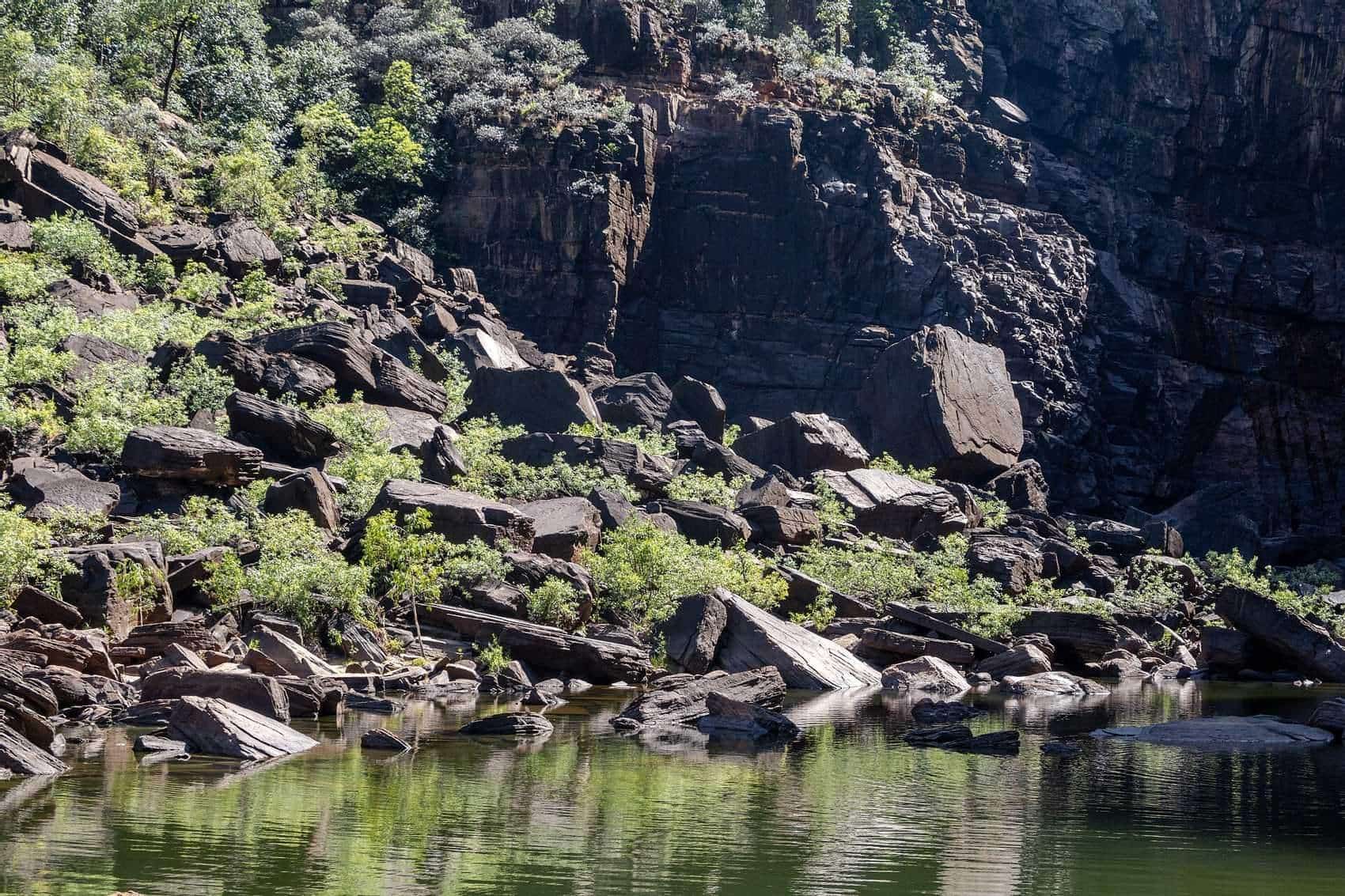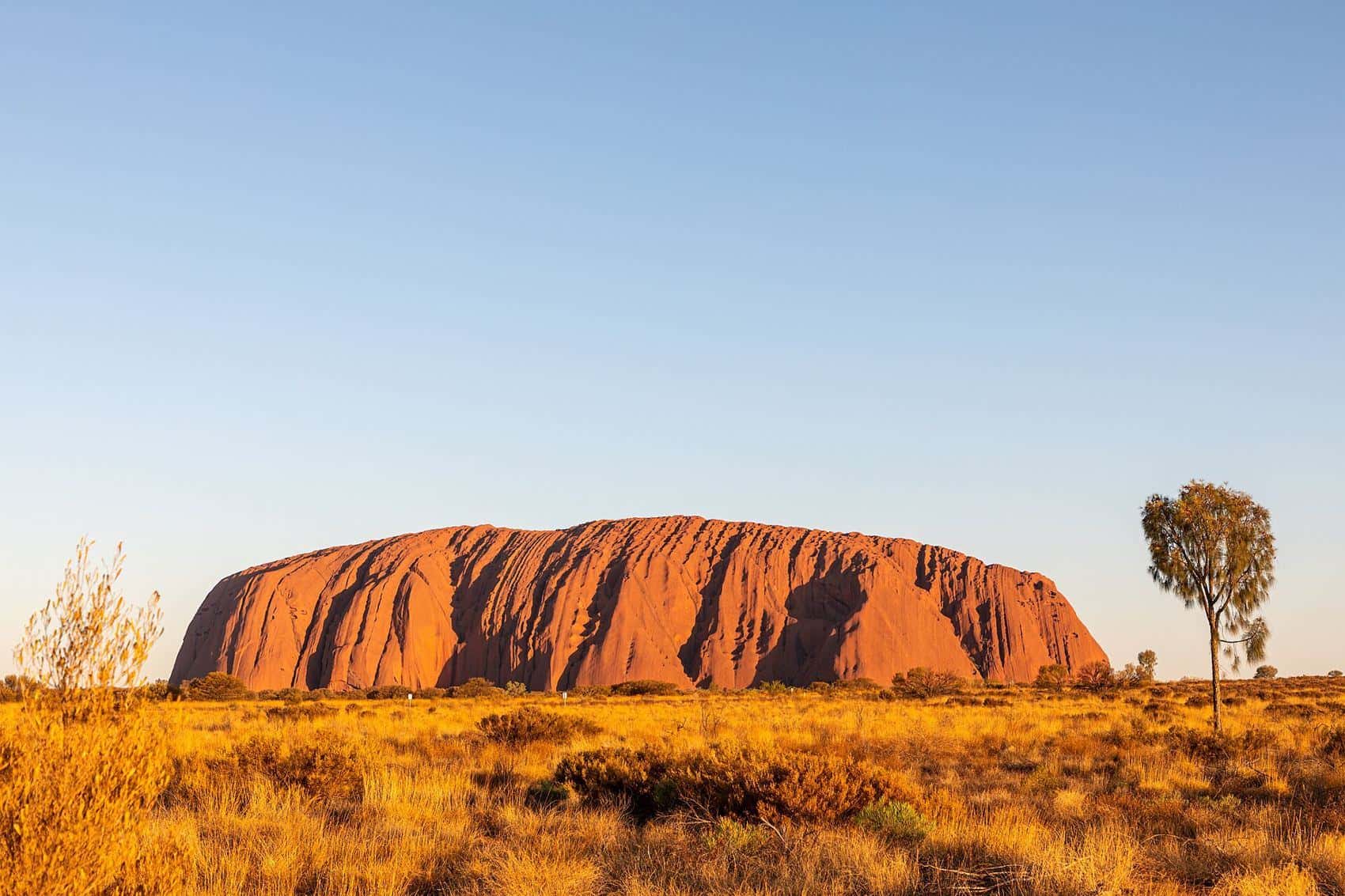
The Red Centre is inland Australia as most first-time visitors mean it: Arrernte Country around Mparntwe/Alice Springs, the MacDonnell Ranges, and Uluru–Kata Tjuta National Park on Anangu land. The heritage IA kept it beside the Top End because they share a territory and almost nothing else in climate.
Uluru is a cultural landscape first. The climb has been closed since 26 October 2019. Walking the base, attending ranger-guided talks, and staying on marked tracks and photography-respect zones is the visit. Kata Tjuta (the Olgas) is part of the same park with its own walks and heat profile. Parks Australia and Anangu, not visitor blogs, set the rules. A park pass is required.
When to go
Avoid high summer unless you understand desert heat as a medical emergency waiting for unprepared walkers. Many independent travellers prefer April–October for daytime walking, accepting cold nights. Sunrise and sunset viewing areas are managed crowds, not private revelations. Carry water well beyond urban instincts. Walk early.
Getting there
Fly to Alice Springs or to the airport that serves the rock (Yulara). The drive between Alice and Uluru is a few hours on sealed road with fatigue, wildlife and little shade — not a commute. Darwin is much further. Drive on the left. Fuel and food at Yulara are a closed-campus reality; we will not quote prices.
Places
Alice Springs is a desert town with galleries, the ranges on its doorstep, and a social complexity that fly-in visitors often miss. Simpsons Gap, Standley Chasm and other West MacDonnell sites are half-day walks with heat and flash-flood risk in the wrong weather. Kings Canyon (Watarrka) is another, separate, serious walk. We will not rank lookouts.
Practical duration pairing respect
Three nights at the rock is better than one exhausted sunset. A week includes Alice and one range or canyon. Pair with the Top End only if you have extra days and a flight. Anangu protocols on photography, climbing (closed), and sacred sites are binding. Sun, dehydration and isolation are the ordinary dangers. Heritage brochure URLs that once sold this as a package 301 to this essay without their rate cards.
Field notes for this page
Distances in Australia punish optimism. If a mapping app promises you two landscapes in one daylight window, believe the second half of that sentence more than the first. Build a spare afternoon for weather, ferries and park closures. Drink water in the heat. Slow down at dusk. Swim between the flags on patrolled beaches and treat crocodile, stinger, alpine and fire signage as instructions.
This rebuild of Aust Travel keeps clean heritage paths alive with new copy and sends messy brochure URLs toward the nearest hub. It does not keep archived prices. Official park, marine-park, road and visa pages override anything here when they disagree. Send corrections through the contact form.
The file nt-red-centre is the Keystatic slug for this guide. The public URL is the heritage or hub path in the frontmatter, which is the path we keep in the sitemap.
Heat as the main character
Summer walking at Uluru without a dawn start is how people become medical statistics. Carry more water than urban pride wants. Winter nights are cold. The climb is closed. Base walks and Kata Tjuta walks have their own distances and exposures. Ranger talks are the interpretation you came for if you came for more than a silhouette.
Alice Springs and the West MacDonnell sites are a separate, hotter-in-the-day, gorge-and-gap geography. Kings Canyon is another serious walk. Do not stack all three with a same-day Darwin fantasy.
Yulara and the closed campus
The resort town exists because the park needs beds at a distance from communities and sites. Prices are a market we will not quote. Fuel, food and timing revolve around that node. Cultural photography bans are binding. Drones are restricted. Anangu law and Parks Australia, not a drone forum, decide.
More on the Red Centre
The climb has been closed since 26 October 2019 and will not be reopened by a visitor opinion. Base walking at dawn is how heat becomes survivable. Kata Tjuta’s walks have their own exposure and cultural protocols. Confirm the live version with Parks Australia and BOM rather than with a screenshot from another year.
Ranger-guided talks are the interpretation layer that a silhouette does not provide. Yulara exists as a service node; we will not quote its prices. Alice Springs to the rock is sealed and still a fatigue drive with wildlife. Confirm the live version with Parks Australia and BOM rather than with a screenshot from another year.
West MacDonnell gaps are hotter-in-the-day gorge walks with flash-flood risk in wrong weather. Watarrka/Kings Canyon is a separate serious walk, not a lookout-from-the-car. Winter nights approach freezing while days can still burn. Confirm the live version with Parks Australia and BOM rather than with a screenshot from another year.
Photography bans at some sites are Anangu law as well as park rule. Drones are restricted. Three nights at the park beats one exhausted sunset transfer. Confirm the live version with Parks Australia and BOM rather than with a screenshot from another year.
None of the extra notes on the Red Centre invent a fare, a ranking or a quote. They exist so this URL is long enough to be useful as orientation and still short enough to finish before you book the wrong extra flight. If a park is closed, go to the museum. If the sea is up, walk the headland you can see. If the heat is dangerous, start before dawn or stay inside. That discipline is the site.
Practical rhythm for the Red Centre
A further way to hold the Red Centre in mind: The climb has been closed since 26 October 2019 and will not be reopened by a visitor opinion. That clause is small on purpose; together they are the trip. A further way to hold the Red Centre in mind: Base walking at dawn is how heat becomes survivable. That clause is small on purpose; together they are the trip.
A further way to hold the Red Centre in mind: Kata Tjuta’s walks have their own exposure and cultural protocols. That clause is small on purpose; together they are the trip. A further way to hold the Red Centre in mind: Ranger-guided talks are the interpretation layer that a silhouette does not provide. That clause is small on purpose; together they are the trip.
A further way to hold the Red Centre in mind: Yulara exists as a service node; we will not quote its prices. That clause is small on purpose; together they are the trip. A further way to hold the Red Centre in mind: Alice Springs to the rock is sealed and still a fatigue drive with wildlife. That clause is small on purpose; together they are the trip.
A further way to hold the Red Centre in mind: West MacDonnell gaps are hotter-in-the-day gorge walks with flash-flood risk in wrong weather. That clause is small on purpose; together they are the trip. A further way to hold the Red Centre in mind: Watarrka/Kings Canyon is a separate serious walk, not a lookout-from-the-car. That clause is small on purpose; together they are the trip.
A further way to hold the Red Centre in mind: Winter nights approach freezing while days can still burn. That clause is small on purpose; together they are the trip. A further way to hold the Red Centre in mind: Photography bans at some sites are Anangu law as well as park rule. That clause is small on purpose; together they are the trip.
A further way to hold the Red Centre in mind: Drones are restricted. That clause is small on purpose; together they are the trip. A further way to hold the Red Centre in mind: Three nights at the park beats one exhausted sunset transfer. That clause is small on purpose; together they are the trip.
Use Parks Australia and BOM on the morning you move. This paragraph exists so the page clears an editorial length bar without copying archive text or inventing commercial claims.
Notes that keep the Red Centre honest
Hold this in mind when you pack for the Red Centre: the climb has been closed since 26 October 2019 and will not be reopened by a visitor opinion. Visitors skip it because it is unglamorous, and then they lose a day. A ranger, skipper or road worker would recognise this about the Red Centre: base walking at dawn is how heat becomes survivable. Treat it as an instruction. If you only remember one unromantic sentence about the Red Centre, remember that kata Tjuta’s walks have their own exposure and cultural protocols. The rest of the itinerary can flex around that.
Searchers land on this URL wanting a shortcut through the Red Centre. The shortcut is this: ranger-guided talks are the interpretation layer that a silhouette does not provide. Everything else is weather. Compared with a brochure paragraph, this is the adult version for the Red Centre: yulara exists as a service node; we will not quote its prices. We will not decorate it.
Sources and further reading
Facts on this page were checked against these primary and official sources. Conditions change — confirm before you travel or buy.
- Northern Territory — Tourism NT
- Parks Australia — Parks Australia
- Climate of Australia — Bureau of Meteorology
- Australia visitor information — Tourism Australia