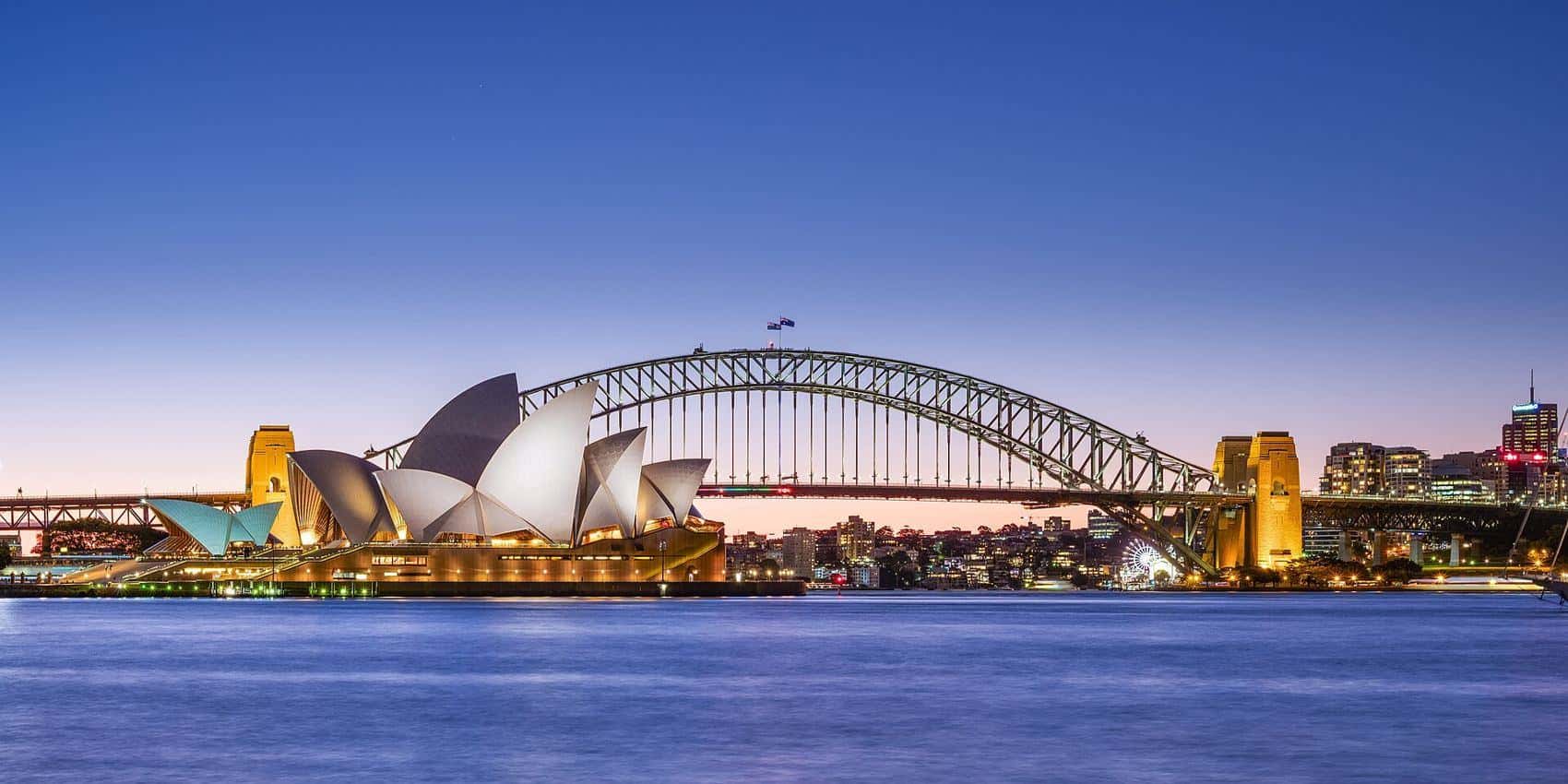
New South Wales holds Australia’s largest city, a long Pacific coastline, the Snowy Mountains, western plains and a capital-territory doughnut around Canberra. The heritage sample on this domain is narrower, and we will not pretend otherwise: Sydney, Sydney Surrounds, and the Southern Tablelands. That trio is still the way most first-time visitors actually use NSW — a harbour city plus day-trip or overnight country — so it is the right place to start.
Sydney is a temperate coastal city with warm to hot summers, mild winters and a harbour that is both commuter infrastructure and the reason people linger. It is also a city of national parks on its doorstep: Sydney Harbour NP, Royal NP to the south, Ku-ring-gai Chase to the north, and the Blue Mountains World Heritage landscape to the west. Those parks are why “Sydney Surrounds” was always a travel region rather than a suburb list.
Day-trip geography without fantasy loops
From the CBD, the Blue Mountains are a western rail-and-highway plateau of sandstone cliffs, eucalypt forest and small towns. They are a full day if you walk; they are a disappointment if you treat them as a lookout you tick in ninety minutes plus peak-hour return traffic. The Northern Beaches are a coastal string with their own bus and ferry logic. The South Coast begins in earnest once you clear Royal National Park — itself a walking destination, not a drive-through.
The Hunter Valley sits north of the city as wine and horse country with a different heat in summer. The Southern Highlands and Southern Tablelands are cooler plateau towns, often used as a winter or spring overnight rather than a true “there and back before dinner” on a short winter day. Canberra and the ACT sit in this tablelands conversation even though they are not NSW: many visitors pass through on the Hume, and the heritage site had a separate ACT intro page we now fold into this geography rather than invent a fake capital hub.
When to go
Summer is beach and harbour season, with heat, bushfire risk in some years, and busy coastal roads. Autumn and spring are often the most comfortable for walking the escarpments. Winter is mild on the coast by European standards and cold on the tablelands and in the Snowies — which this heritage sample does not carry as a child URL, but which is a real NSW winter sports and walking region with its own alpine hazards. Check NSW National Parks fire, flood and track pages; they close things for reasons that do not appear on Instagram.
Gateways
Sydney Airport is the international hinge for the state and for much of the country. Central and harbour-adjacent stations make some surrounds feasible without a car; others, especially patchy south-coast and tablelands walking, still assume a vehicle or a tour. Driving is on the left. Toll roads in Sydney are normal infrastructure — check the current system rather than assuming cash booths.
Beyond this sample, NSW still has the North Coast, New England, the Central West, Outback NSW and the Riverina. They are not missing because they are unimportant; they are missing because the CDX sample we were given did not include clean child paths for them. The state hub can say they exist. It will not invent rankings.
Heritage guides to open next
- Sydney
- Sydney Surrounds
- Southern Tablelands
- Day-trip essays: Blue Mountains, South Coast, Historic west, Highlands, Northern Beaches, Hunter
Give Sydney itself two or three nights if it is your arrival city. Give one surround a full day. That is already a week if you also want a museum day and a harbour day. It is a better week than five exhausted half-days.
Field notes for this page
Distances in Australia punish optimism. If a mapping app promises you two landscapes in one daylight window, believe the second half of that sentence more than the first. Build a spare afternoon for weather, ferries and park closures. Drink water in the heat. Slow down at dusk. Swim between the flags on patrolled beaches and treat crocodile, stinger, alpine and fire signage as instructions.
This rebuild of Aust Travel keeps clean heritage paths alive with new copy and sends messy brochure URLs toward the nearest hub. It does not keep archived prices. Official park, marine-park, road and visa pages override anything here when they disagree. Send corrections through the contact form.
Guides in this section
NSW region
Sydney
Sydney as a heritage region page: harbour geography, coastal walks, when the temperate climate is kind, and how the city sits beside Sydney Surrounds.
Read · 7 min

NSW region
NSW Southern Tablelands
The Southern Tablelands as cooler plateau country south-west of Sydney: towns, frost, Canberra as a neighbour, and why this is an overnight grain not a flying visit.
Read · 7 min
NSW region
Sydney Surrounds
Sydney Surrounds as day-trip and overnight country: Blue Mountains, Royal National Park, northern and southern coasts, Hunter and highlands as early-start options.
Read · 7 min
NSW essay
Hunter Valley country
The Hunter as agricultural and wine country north of Sydney: heat, drink-driving law, an early start from the city, and no cellar-door trophies.
Read · 7 min
NSW day trip
Blue Mountains day trip
A full walking day on a sandstone plateau, not a lookout raid. Trains help; fog and fire closures decide.
Read · 7 min
NSW day trip
Historic west of Sydney
Parramatta, Windsor and the older Hawkesbury towns as a history-and-river day, not a mountain substitute.
Read · 7 min
NSW day trip
Hunter Valley day trip
An early start, one cellar-door cluster, a designated driver. The overnight is kinder.
Read · 7 min
NSW day trip
Northern Beaches day trip
A coastal string north of the harbour: ferries, buses, patrolled surf, and one beach rather than ten.
Read · 7 min
NSW day trip
South Coast day trip from Sydney
Royal National Park and the first south-coast bays. A walking or swimming day, not a race to the Victorian border.
Read · 7 min
NSW day trip
Southern Highlands day trip
Cooler plateau towns south-west of Sydney. Gardens, winter frost, and an overnight if you linger.
Read · 7 min
Frequently asked questions
What are Sydney-surrounds day-trip regions?
Classic day-trip country from Sydney includes the Blue Mountains to the west, the Northern Beaches and Central Coast to the north, Royal National Park and the South Coast, and the Southern Highlands or Hunter Valley if you start early. Distances look short on a map, but traffic and walking time matter. One landscape per day is more realistic than a loop of all of them.
Sources and further reading
Facts on this page were checked against these primary and official sources. Conditions change — confirm before you travel or buy.
- Visit NSW — Destination NSW
- NSW National Parks — NSW National Parks and Wildlife Service
- Climate of Australia — Bureau of Meteorology
- Australia visitor information — Tourism Australia