Victoria is small by Australian area and dense by Australian visitor infrastructure: a capital that rewards walking, a giant enclosed bay, a shipwreck west coast, alpine country, and a goldfields hinterland. The heritage sample on Aust Travel kept three grains — Melbourne, Melbourne Surrounds, and Port Phillip Bay — which is the right first cluster for a short trip. The Great Ocean Road, the Grampians, Wilsons Promontory and the High Country are real Victoria and appear here as neighbouring logic, not as fake child URLs.
Melbourne’s reputation for “four seasons in one day” is a climate remark the Bureau of Meteorology would recognise as changeable southern weather, not a joke you can ignore when packing. Summers can be hot, with a fire-danger overlay in some years. Winters are cool and wet. Spring and autumn are when gardens, bay beaches and walking tracks are often at their most usable, which is why those months feel busy.
City, bay, surrounds
The city is a grid and a scatter of inner neighbourhoods, tram routes and parks, with a laneway culture that is geography (little streets, adaptive reuse) rather than a ranking of coffee. Port Phillip Bay is the water body that makes St Kilda, Brighton, the Bellarine and the Mornington Peninsula a single marine weather system: bay beaches are not ocean beaches, and the Heads are a different, rougher world. Melbourne Surrounds is the ring of Dandenongs, Yarra Valley, spa country and peninsula towns that work as day trips or overnights.
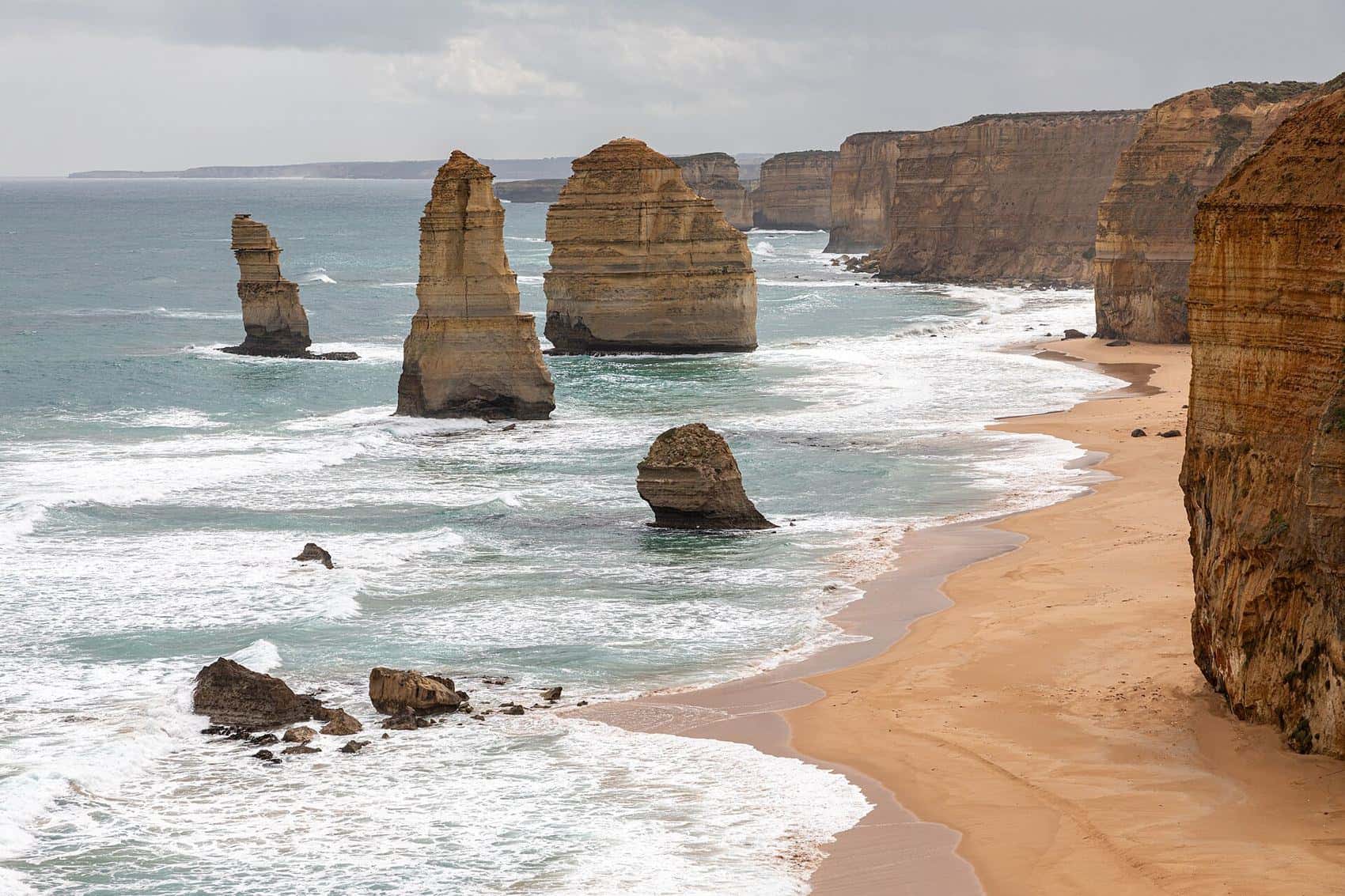
The Great Ocean Road leaves this cluster to the west. It is a coastal drive with cliffs, rainforest spurs and towns that fill up in summer and at long weekends. It is not a two-hour out-and-back from Flinders Street if you want to walk, not just pull into a lookout. Treat it as its own overnight if you can. Parks Victoria manages many of the headline coastal and forest sites; check track and fire notices.
Getting around
Melbourne Airport (Tullamarine) is the main international gateway; Avalon also handles some domestic traffic. The city’s trams, trains and buses make a car-free inner stay realistic. Surrounds and the west coast still push many visitors into a hire car. Drive on the left; allow more time than mapping apps suggest on the Great Ocean Road, which is winding, popular and occasionally closed by fire, cliff instability or crashes.
Heritage guides
A week in Victoria can be a city-and-bay week, or a city-plus-one-overnight-west week. It cannot honestly be “Melbourne, the Prom, the Grampians, the High Country and a Murray paddle” unless your calendar is doing different work. Read one child guide thoroughly rather than skimming five.
Wine regions (Yarra, Mornington, Bellarine, Rutherglen and others) are agricultural landscapes with cellar-door rules, drink-driving laws and harvest seasons. We describe them as geography. We do not score bottles.
Field notes for this page
Distances in Australia punish optimism. If a mapping app promises you two landscapes in one daylight window, believe the second half of that sentence more than the first. Build a spare afternoon for weather, ferries and park closures. Drink water in the heat. Slow down at dusk. Swim between the flags on patrolled beaches and treat crocodile, stinger, alpine and fire signage as instructions.
This rebuild of Aust Travel keeps clean heritage paths alive with new copy and sends messy brochure URLs toward the nearest hub. It does not keep archived prices. Official park, marine-park, road and visa pages override anything here when they disagree. Send corrections through the contact form.
A week that actually fits Victoria
A first Victorian week that works is almost always a city-and-one-contrast week. Contrast A is Port Phillip and a peninsula overnight: bay swimming, a Heads walk if the weather allows, and a return on the train. Contrast B is a west-coast overnight on the Great Ocean Road, accepting that you will not also “do” the Grampians. Contrast C is a High Country or goldfields loop in a different season. Trying to hold A, B and C in seven days is how people remember the West Gate Bridge.
Melbourne’s tram grid is the reason a car-free inner stay is realistic. The surrounds are the reason a hire car appears on day four. Parks Victoria closes cliff walks after rockfall and forest walks after fire; those closures are more important than any café hour. If you are coming from a northern-hemisphere summer in January, this is one of the states whose beaches and long evenings match your calendar — with the caveat of heatwaves and fire danger that BOM and emergency services will describe in plain language.
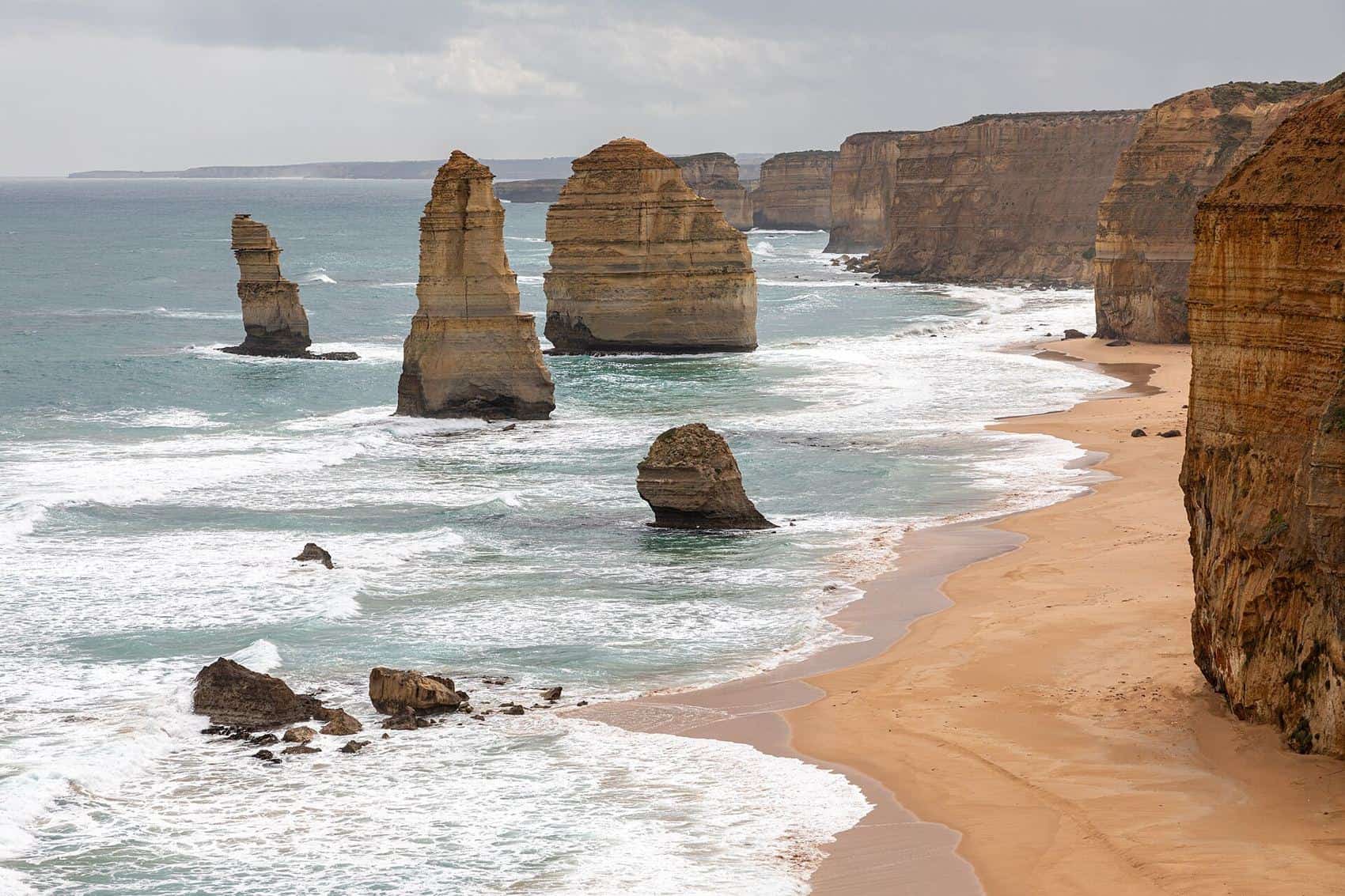
Wine districts, laneways and the bay are three different speeds. Read the child guides rather than treating the state as a single postcard of a yellow stack on a cliff. The stack is west, the lanes are the grid, the bay is a shipping harbour with suburbs on its rim. Honour the split and Victoria becomes easy. Ignore it and the map lies.
Neighbouring states without greed
Sydney is a flight, not a day trip. Tasmania is a flight or a ferry with a timetable. South Australia is a drive that eats a day if you pretend the Dukes Highway is empty. First-time visitors who add those on a Victorian week are collecting stamps. Return visitors who pick one neighbour and a season are travelling. This hub would rather you stay.
Guides in this section
Victoria region
Melbourne Surrounds
Melbourne Surrounds: Dandenong Ranges, Yarra Valley, Mornington and spa country as day-trip and overnight geography around Port Phillip.
Read · 7 min
Victoria region
Melbourne
Melbourne as a heritage region: a walkable grid, trams, parks, changeable southern weather, and laneways as geography rather than a ranked list.
Read · 7 min
Victoria region
Port Phillip Bay
Port Phillip Bay as a heritage region: enclosed bay beaches, the Heads, Bellarine and Mornington shores, and why bay swimming is not ocean swimming.
Read · 7 min
Victoria essay
Victorian wine landscapes
Victorian wine country as climate and landscape: Yarra, Mornington, Bellarine, Rutherglen and others — without scores, prices or invented cellar-door quotes.
Read · 7 min
Victoria essay
Melbourne lanes
Melbourne’s laneways as leftover service geography: how to walk them, when they flood with umbrellas, and why this is not a ranked coffee map.
Read · 7 min
Sources and further reading
Facts on this page were checked against these primary and official sources. Conditions change — confirm before you travel or buy.
- Visit Victoria — Visit Victoria
- Parks Victoria — Parks Victoria
- Climate of Australia — Bureau of Meteorology
- Australia visitor information — Tourism Australia